
Fine & coarse aggregates — 60–75% of concrete volume
Aggregates
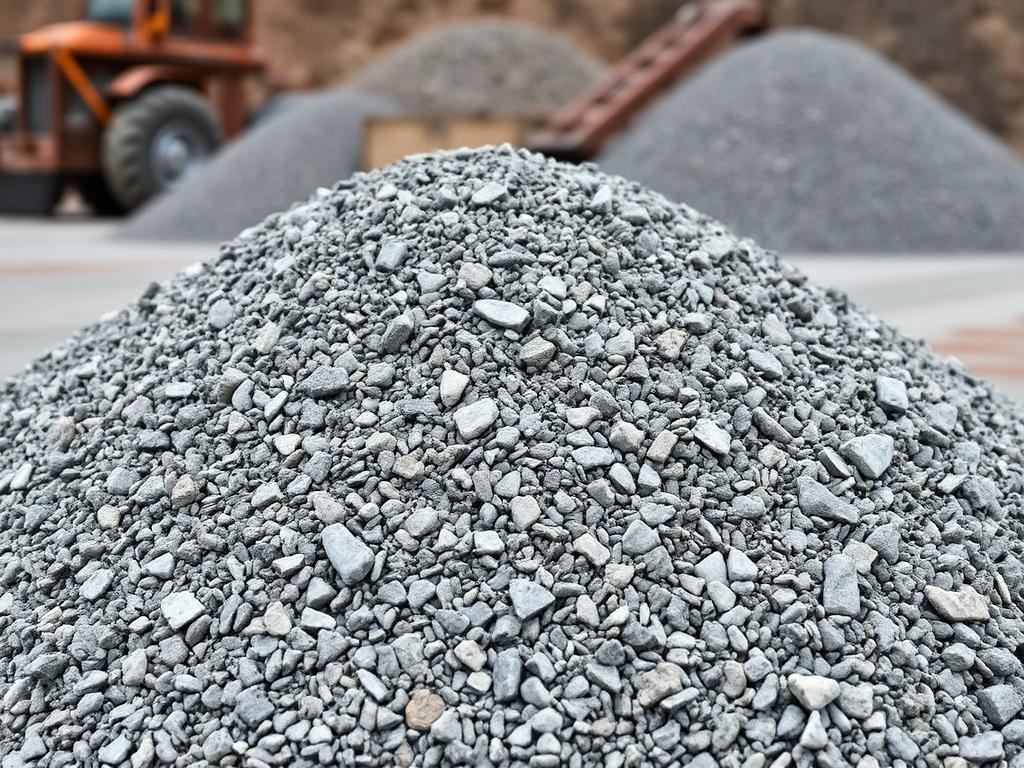
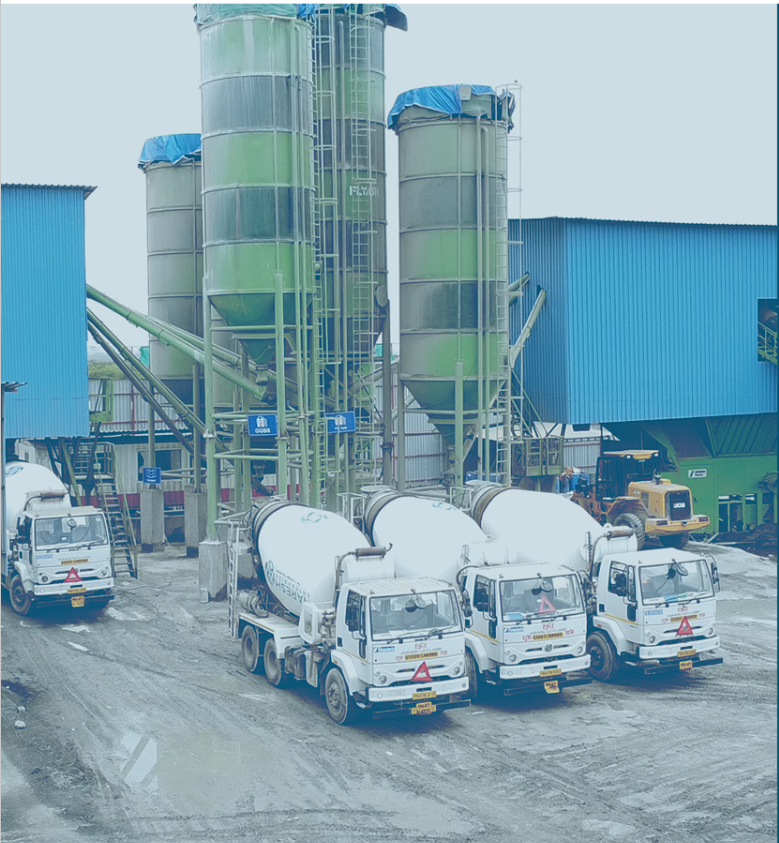
In an RMC plant, aggregates are one of the main raw materials used for concrete production. Aggregates occupy around 60% to 75% of total concrete volume and play a major role in strength, durability and workability.
Types of aggregates
- Fine aggregate (sand) — fills voids, helps workability and finishing. Types: River sand, Crushed sand (M-sand), Manufactured sand. Typical size: below 4.75 mm.
- Coarse aggregate — stone particles for strength. Common RMC sizes: 10 mm, 20 mm, 40 mm (heavy concrete). Source: crushed quarry stone.
Functions of aggregates in concrete
- Provide compressive strength
- Reduce shrinkage and cracking
- Improve durability
- Reduce cement consumption and project cost
- Provide bulk and stability
Important properties
| Size | Proper grading improves concrete quality |
| Shape | Angular aggregates provide better bonding |
| Strength | Should resist crushing and impact |
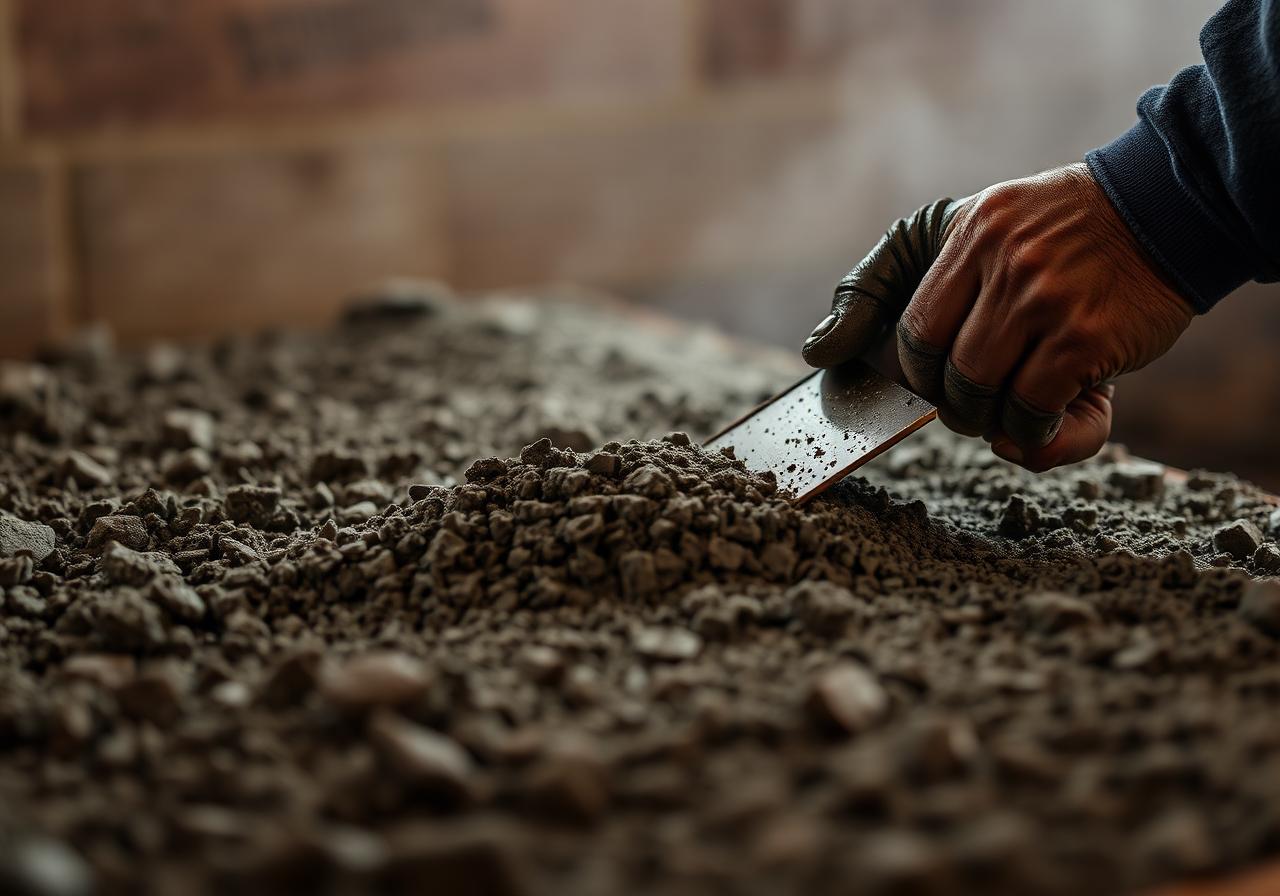
| Cleanliness | Must be free from dust, clay and organic material |
| Water Absorption | Low absorption preferred |
| Specific Gravity | Important for mix design |
| Grading | Proper particle distribution ensures workability |
Laboratory tests performed
- Sieve Analysis
- Water Absorption Test
- Specific Gravity Test
- Aggregate Impact Value
- Crushing Value Test
- Flakiness & Elongation Index
- Moisture Content Test
- Bulk Density Test
Need Aggregates?
Share quantity and pour / delivery date — we'll confirm availability today.